Just like water is filled in the bottle. Water is value and bottle is variable of that value.
Similarly, a python has also a variable that holds value. Example, a=50
Creating Variables
You had not to declare any command to create a variable.
You can create a variable by the “=” sign. Example, a=”john”, b=5 etc.
Example
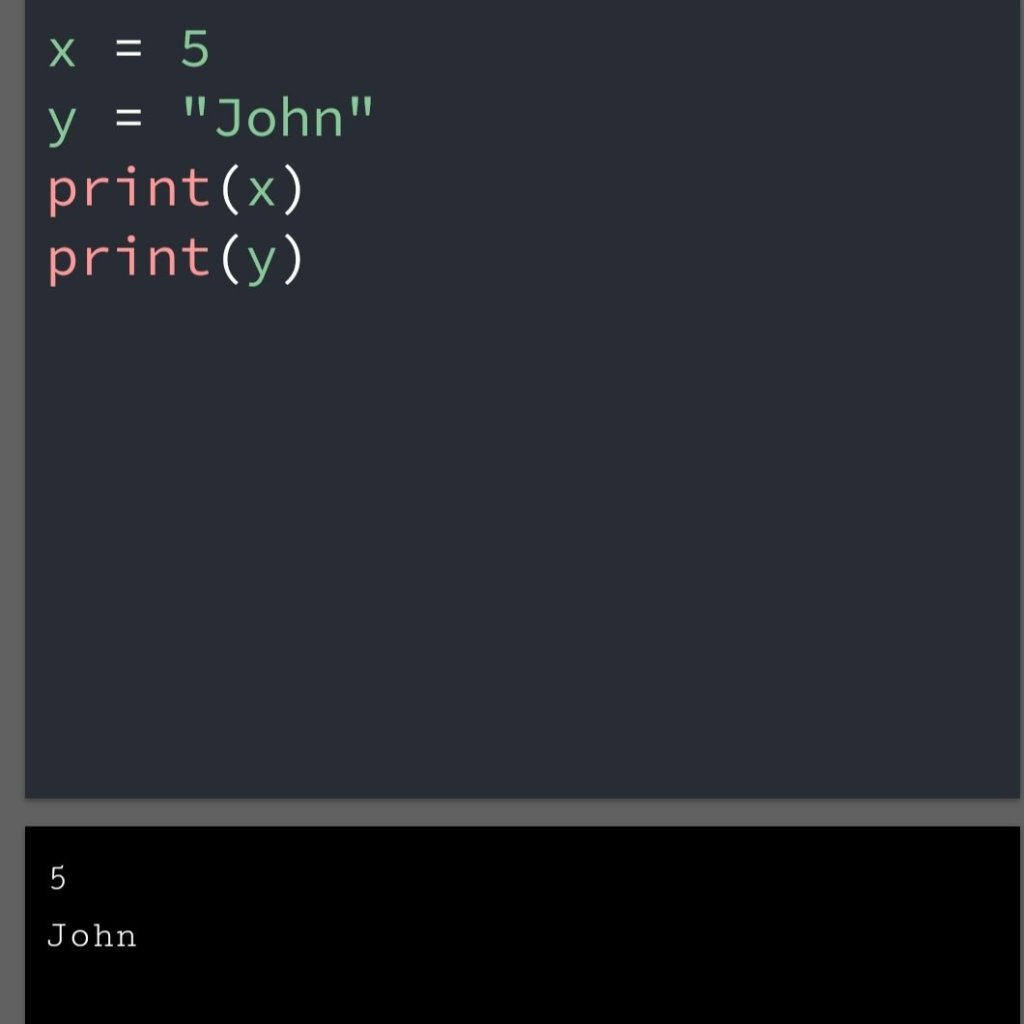
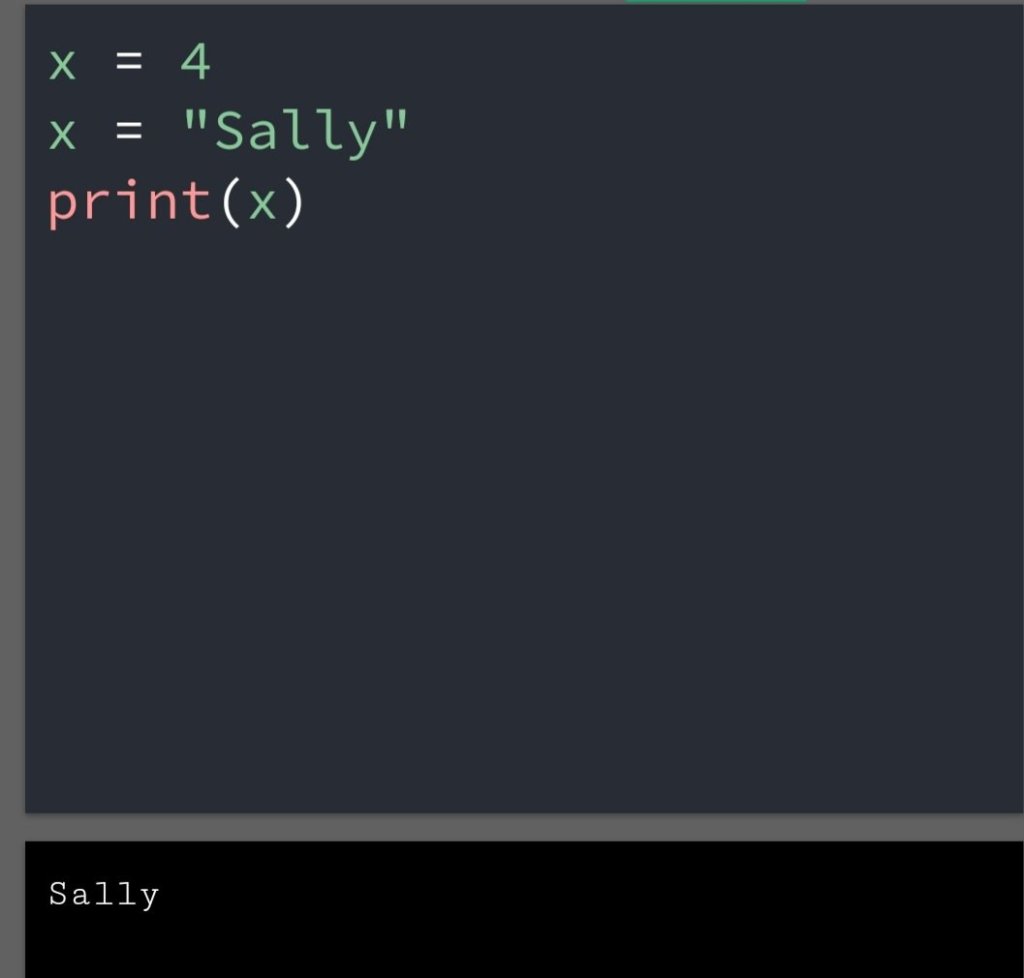
You can change the type of variable as per your interest.
Example
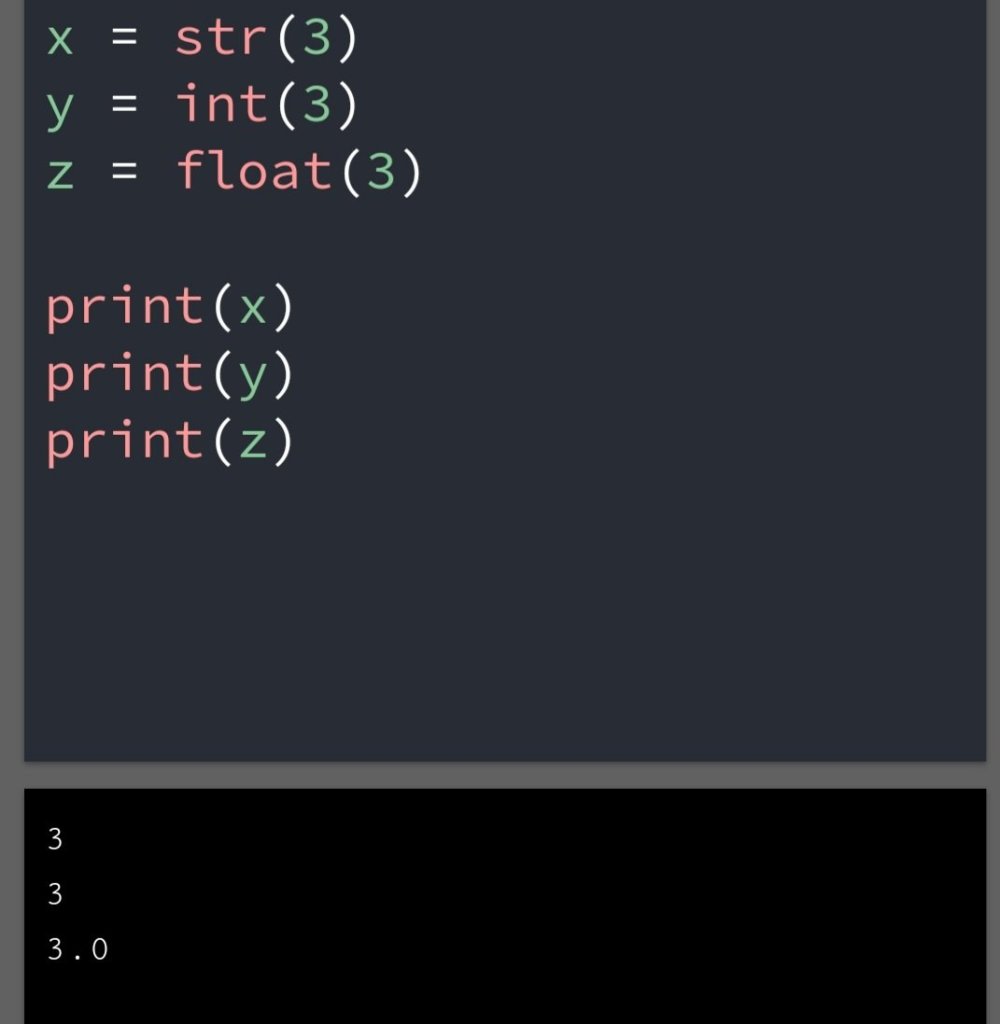
Casting
You can specify the data type of variable with the help of casting.
This will produce the default data type which we have done in casting.
Example
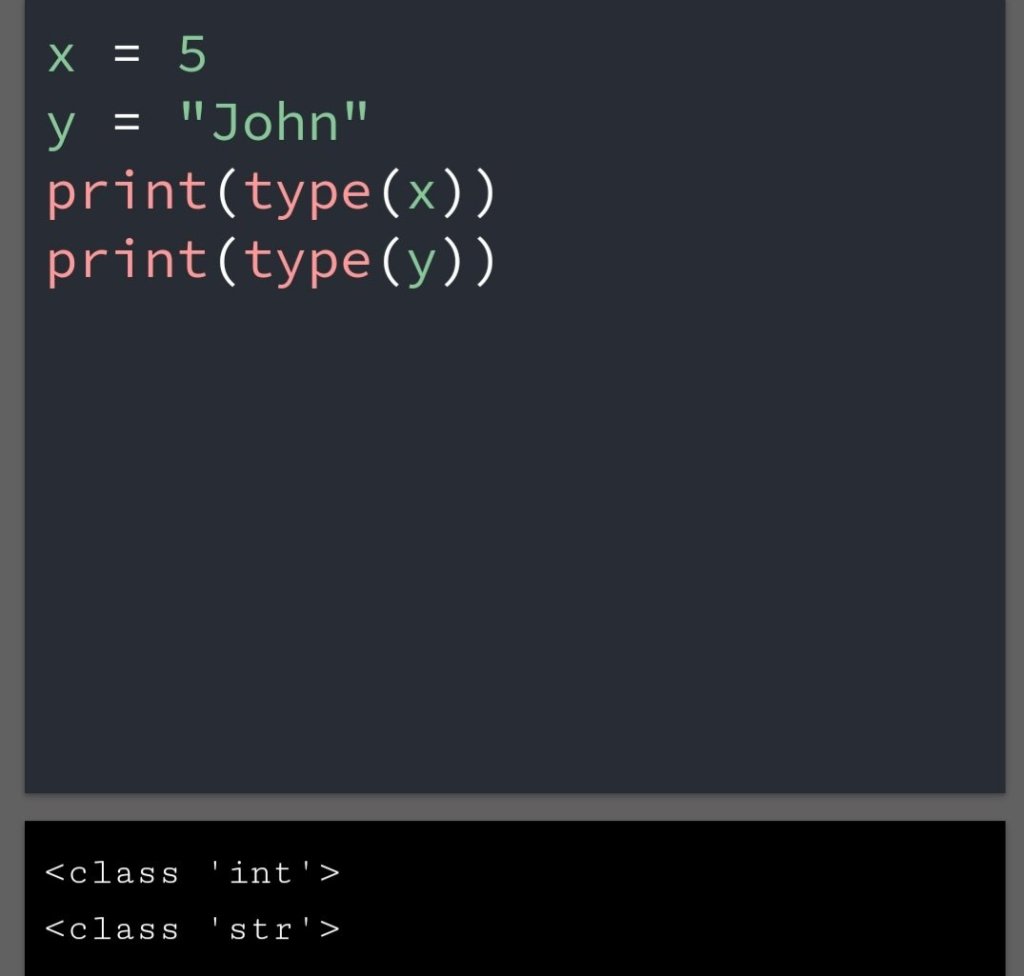
Get the type
We can get the type of variable with the help of the type() method.
Example
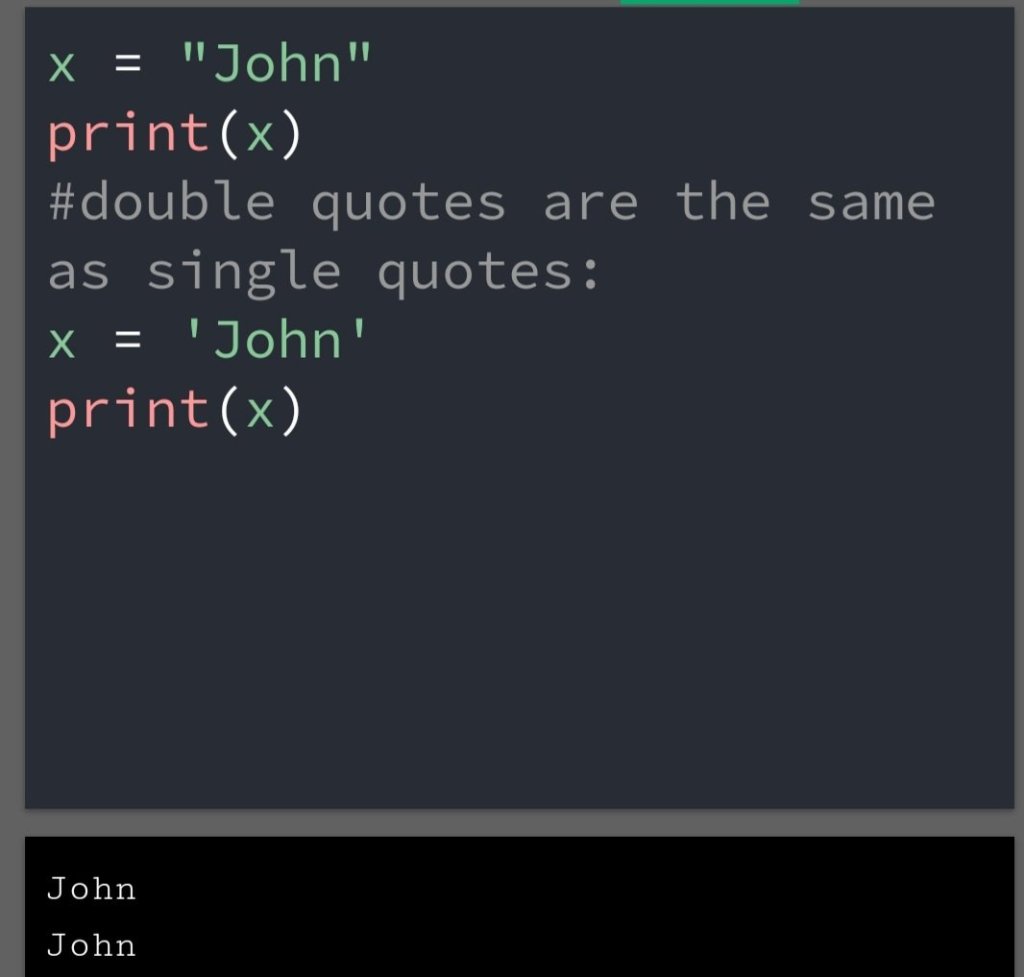
Single or double quotes?
A string variable can be declared by either double-quote or single-quote.
Another programming language has no facility of this type. In C double and single quotes are different meaning.
Example
Case Sensitive
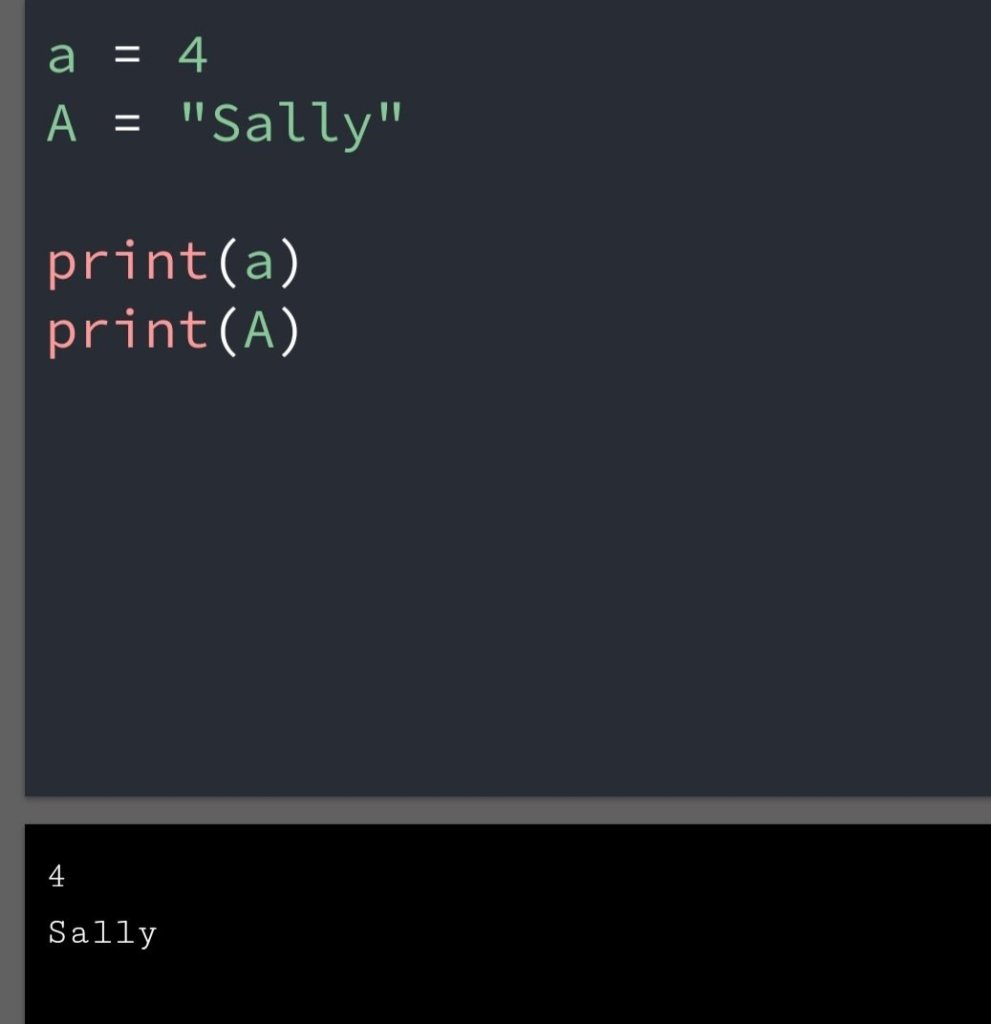
Python is case sensitive language.
You can’t use ‘a ‘ and ‘A’ as the same variable. Both will give different output.
Example
Multiple assignment
You can assign multiple variables to one value in python. In another programming language, it’s tough to call.
Example
a=b=c=10

print(a)
print(b)
print(c)
Output:
10
10
10
Summary:
• We have not to give any command to declare a variable in python.
• Python variable has a facility of multiple variables at once.
• There is no difference in any single or double quote.
• In short python has the ease and flexibility of declaring and creating variable in python.
See Also:
https://vipulkunwar503.code.blog/2021/06/13/python-syntax/
/https://vipulkunwar503.code.blog/2021/06/10/python-numbers/
 Mr.Python